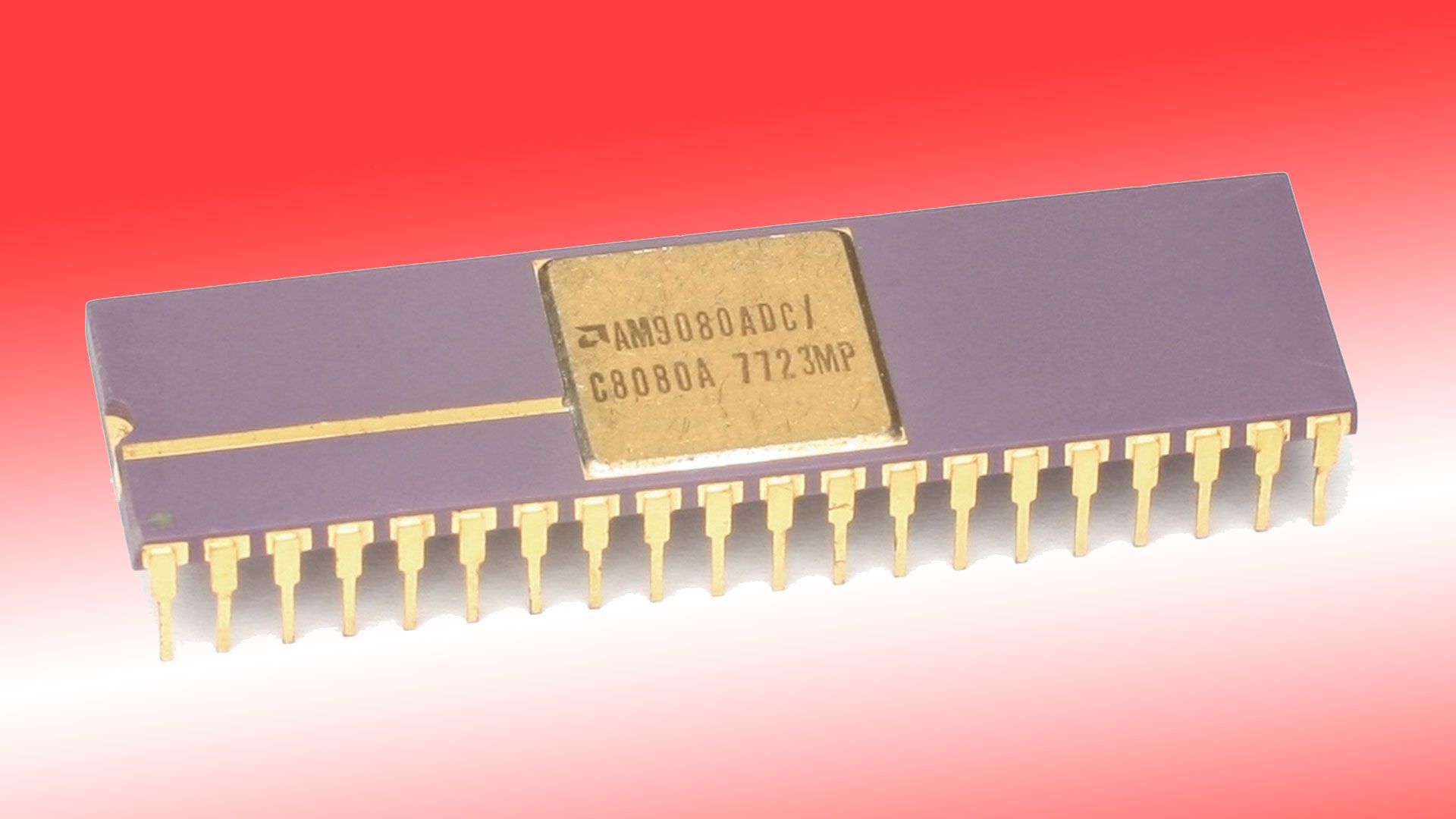
- > AMD entered the CPU market with reverse-engineered Intel 8080 clone 50 years ago
Moral: Awesome productivity happens when IP doesn't get in the way.
- I wonder if in 2025 a company would even allowed to start before being curb stomped by Intel's IP lawyers. After all, they started making clones, something that China gets accused of a lot.
- I'm still a heavy advocate for requiring second/dual-sourcing in govt contracts... literally for anything that can be considered essential infrastructure or communications technology and medicine. A role of govt in a capitalist society is to ensure competition and domestic availability/production as much as possible.
While my PoV is US centered, I feel that other nations should largely optimize for the same as much as possible. Many of today's issues stem from too much centralization of commercial/corporatist power as opposed to fostering competition. This shouldn't be in the absence of a baseline of reasonable regulation, just optimizing towards what is best for the most people.
- If Intel decide to focus on Foundry, I just wish AMD and Intel could work together and make a subset clean up of x86 ISA open source or at least available for licensing. I dont want it to end up like MIPS or POWER ISA where everything is too little too late.
- “Behind every successful fortune there is a crime.”
- Mario Puzo, The Godfather
- Gordon should have stuck to the symphonic
- Seems like an interesting story, Ashawna - she was about 25 at the time, and as per Wikipedia, already worked on the military projects - the Sprint Missile System, and was at Xerox.
> The processor was reverse-engineered by Ashawna Hailey, Kim Hailey and Jay Kumar. The Haileys photographed a pre-production sample Intel 8080 on their last day in Xerox, and developed a schematic and logic diagrams from the ~400 images.
- > Am9080 variants ran at up to 4.0 MHz
Definitely read that wrong the first time I skimmed the article
- AMD was already in the CPU market with bit-slice LSI chips, the Am2900 set of chips: https://en.wikipedia.org/wiki/AMD_Am2900
Those worked in 4-bit slices, and you could use them as LEGO blocks to build your own design (e.g. 8, 12 ou 16 bits) with much fewer parts than using standard TTL gates (or ECL NANDs, if you were Seymour Cray).
The 1980 Mick & Brick book Bit-slice Microprocessor Design later gathered together some "application notes" - the cookbooks/crib sheets that semiconductor companies wrote and provided to get buyers/engineers started after the spec sheets.
- ah I remember those amazing days
instant 20% speed boost replacing the IBM 8088 with the v20 chip
bought a sleeve of them cheap and went around to all the PCs and popped them out
only problem was software that relied on clocks ran too fast
- >In 1975, AMD could make these processors for 50 cents and sell them for $700.
Apparently by ripping off their military customers.
>says Wikipedia.
Why is that a primary source?